
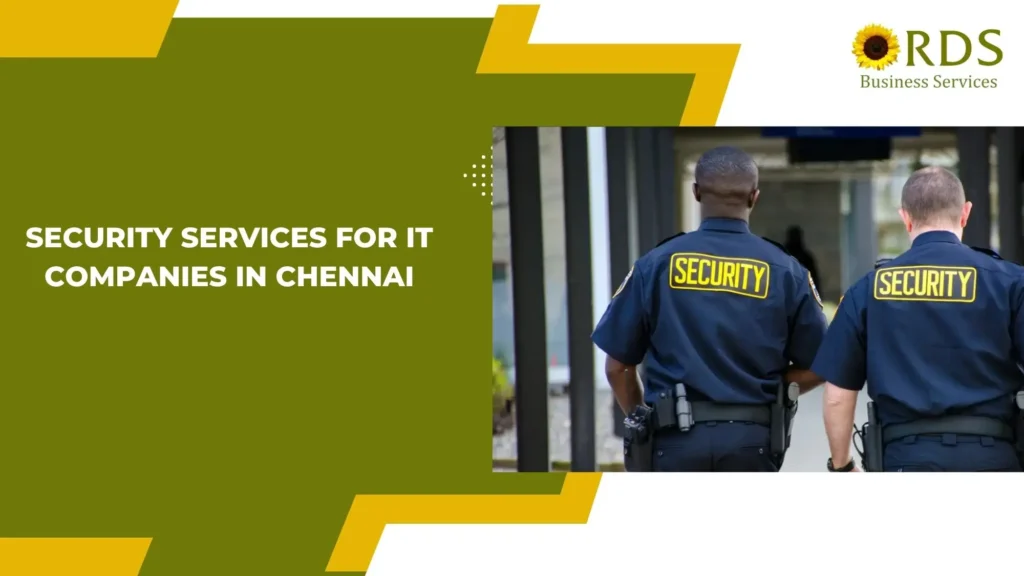
An IT office may look different from a factory, warehouse, or commercial complex, but its security requirements can be just as demanding. Employees may work late, visitors may arrive for meetings, vendors may require temporary access, and sensitive equipment can be concentrated in a relatively small area.
For an IT company in Chennai, security is not simply about placing a guard at the entrance. It involves controlling who enters the premises, monitoring movement, responding to incidents, protecting employees, managing visitors, and supporting the company’s wider physical security procedures.
This is where security services for IT companies in Chennai become valuable. A properly planned security operation can combine trained guards, access control, visitor management, surveillance, emergency procedures, patrols, and reporting into one coordinated system.
This guide explains what IT companies should look for, how security guards should be deployed, which risks require the most attention, and how to select the right security service provider in Chennai.
What Security Services Do IT Companies in Chennai Need?
IT companies generally need a combination of trained security guards, access control, visitor management, CCTV monitoring, entry and exit verification, patrols, incident reporting, emergency response procedures, and asset protection.
The right model depends on the office’s size, working hours, employee strength, number of entrances, server or equipment areas, visitor volume, location, and specific security risks.
The objective is not simply to increase the number of guards. It is to create a security operation that reduces unauthorized access, improves incident response, protects employees and assets, and supports uninterrupted business operations.
Why Do IT Companies Need Dedicated Security Services?
An IT office can have hundreds or thousands of employees moving through the premises every day. Add contractors, delivery personnel, clients, interview candidates, housekeeping teams and vendors, and the number of people entering the building can become difficult to manage without a defined process.
A security guard positioned at the entrance provides only one layer of protection.
Effective corporate security considers what happens before, during, and after a person enters the premises.
For example, an IT company may face:
- Unauthorized visitors entering restricted areas
- Tailgating through controlled doors
- Theft of laptops, monitors or other equipment
- Employee access outside approved working hours
- Unauthorized photography or recording
- Suspicious activity around parking areas
- Vendor or delivery personnel entering without verification
- Lost access cards
- Disputes or disturbances at the reception area
- Emergency situations requiring controlled evacuation
- After-hours movement in offices or server-related areas
These risks require procedures, supervision and trained personnel rather than security presence alone.
What Should Security Services for IT Companies in Chennai Include?
A professional security plan should be designed around the actual movement of people, assets and information within the premises.
1. Main Gate and Reception Security
The entrance is the first security checkpoint.
Security personnel can verify visitors, employees, vendors and delivery personnel according to the company’s access policy. Depending on the office, this may include checking identification, confirming appointments, issuing visitor passes and maintaining entry records.
The guard should also understand when an individual should be directed to reception instead of being allowed to proceed directly into the office.
2. Visitor Management
IT offices frequently receive clients, candidates, consultants and service providers.
A visitor management process can include:
- Identity verification
- Appointment confirmation
- Visitor registration
- Temporary visitor badges
- Host confirmation
- Entry and exit recording
- Escort requirements for restricted areas
- Visitor badge return
The goal is to make legitimate visitors easy to process while preventing unauthorized movement.
3. Access Control
Access control determines which people can enter specific areas.
An IT company may have different security zones, such as:
- Reception
- Employee workspaces
- Meeting rooms
- Management areas
- Server rooms
- Network rooms
- Storage areas
- Electrical or utility rooms
- Parking facilities
Security personnel should understand the access hierarchy and know what to do when someone attempts to enter an area without authorization.
4. CCTV Monitoring
CCTV is useful for monitoring entrances, exits, corridors, parking areas and other important locations.
However, cameras should not be treated as a substitute for trained guards.
A camera records an event. A trained security professional can identify suspicious behavior, intervene according to procedure, contact the appropriate person and document what happened.
5. Patrols
Regular patrols can help identify unusual activity that may not be visible from the reception desk.
Patrol schedules can cover:
- Parking areas
- Building entrances
- Emergency exits
- Common areas
- Perimeter areas
- Less frequently occupied floors
- Equipment and storage zones
For larger campuses, patrol routes should be planned rather than performed randomly.
6. Asset Protection
IT companies may hold significant quantities of laptops, monitors, networking equipment, servers and other technology assets.
Security personnel can support asset protection through:
- Exit checks based on company policy
- Material movement records
- Vendor verification
- Delivery documentation
- Restricted-area monitoring
- Incident reporting
These processes should be designed carefully so they do not unnecessarily disrupt employees.
Security Guards for IT Companies in Chennai: What Should You Look For?
The quality of a guard matters more than simply the number of people deployed.
Security guards for IT companies in Chennai should be selected based on the environment they will work in. An office security assignment requires different communication and visitor-handling skills from a construction site or industrial facility.
Look for personnel who can demonstrate:
- Professional communication
- Alertness
- Basic documentation skills
- Visitor handling ability
- Emergency response awareness
- Discipline
- Appropriate grooming and conduct
- Understanding of access control procedures
- Ability to follow escalation protocols
- Experience in corporate environments
For senior or sensitive locations, additional supervisory experience may also be appropriate.
Physical Security vs Digital Security: Where Is the Boundary?
An IT company has an unusual security requirement because its physical and digital environments are closely connected.
A guard cannot prevent a phishing attack, ransomware infection or insecure application.
Similarly, a cybersecurity team cannot physically verify whether an unknown person has entered a restricted server room.
The two functions complement each other.
| Physical Security | Digital Security |
|---|---|
| Guards and supervisors | Security operations teams |
| Visitor verification | Identity and access management |
| CCTV | Network monitoring |
| Physical access control | Digital access control |
| Asset movement checks | Data loss prevention |
| Patrols | Threat monitoring |
| Incident reporting | Security incident response |
| Restricted-area protection | Application and system security |
This distinction is particularly important when selecting a security service company. A physical security provider should not claim that guards alone can protect an organization’s entire digital infrastructure.
For technical risks, companies may separately require cybersecurity assessments, vulnerability management or application security testing.
How Should an IT Company Plan Its Security Deployment?
There is no universal guard-to-office-size ratio that works for every company.
Deployment should be based on risk and movement patterns.
A practical assessment should consider:
- Number of entrances and exits
More access points generally require more control. - Employee strength
A 50-person office and a 2,000-person technology campus have very different requirements. - Operating hours
Night shifts, 24-hour operations and weekend work change the security model. - Visitor volume
Frequent clients, candidates and vendors require stronger reception and visitor management. - Sensitive areas
Server rooms, network rooms and storage areas may require restricted access. - Parking arrangements
Large parking areas may require separate patrol and access procedures. - Location-specific risks
The security plan should account for the building, surrounding environment and access routes. - Emergency requirements
Fire, medical emergencies, suspicious packages, disturbances and evacuation scenarios should be considered.
The right security solution is therefore determined by a site assessment rather than a standard package.
A Practical Security Model for a Chennai IT Office
A medium-sized IT office could use a layered approach such as:
| Security Layer | Primary Responsibility |
|---|---|
| Main entrance | Employee and visitor verification |
| Reception | Visitor registration and host confirmation |
| CCTV | Visual monitoring and evidence |
| Access control | Restricting sensitive areas |
| Floor patrols | Detecting unusual activity |
| Parking | Vehicle and movement monitoring |
| Supervisor | Staff coordination and escalation |
| Incident register | Recording events and actions |
| Emergency procedure | Coordinated response |
The exact deployment should be adjusted after a site assessment.
This approach is more effective than simply asking a service provider for the “best security” package without explaining the company’s actual requirements.
Security Measures That Matter Most in IT Offices
Some security controls deserve particular attention because they address common operational gaps.
Prevent Tailgating
Tailgating occurs when an unauthorized person follows an authorized employee through a controlled entrance.
Security personnel should understand access-control procedures and be trained to challenge or redirect individuals when required.
Control After-Hours Access
Late-night employees, cleaning teams and maintenance contractors create a different security environment.
Companies should maintain clear procedures for:
- Authorized employee access
- Contractor access
- Late-night visitors
- Maintenance work
- Weekend access
- Emergency entry
Manage Deliveries Separately
Delivery personnel should not automatically receive unrestricted access to employee areas.
A controlled delivery process can reduce unnecessary movement through the office.
Protect Restricted Areas
Server rooms and infrastructure areas should have stricter access controls than general workspaces.
Physical security becomes particularly important when sensitive equipment is concentrated in one location.
Maintain Incident Records
A security incident that is not documented can become difficult to investigate later.
Reports should capture what happened, when it occurred, who was involved, what action was taken, and whether escalation was required.
How to Choose Security Service Providers in Chennai
Choosing between different security companies in Chennai should involve more than comparing monthly quotations.
Ask each provider about the following.
Licensing and Compliance
Private security agencies in India are regulated under the Private Security Agencies (Regulation) Act, 2005, commonly referred to as PSARA. The Act establishes requirements concerning private security agencies, licensing and training.
The Ministry of Home Affairs also lists the PSARA Act and related central model rules among the relevant acts and rules administered under its Police Modernisation Division.
Before appointing an agency, businesses should verify applicable licensing and compliance requirements rather than relying only on a sales presentation.
Training
Ask how guards are trained before deployment.
Training should be relevant to the actual assignment and may cover:
- Access control
- Visitor handling
- Emergency response
- Incident reporting
- Fire safety awareness
- Communication
- Workplace conduct
- Basic first-response procedures
The PSARA framework specifically includes requirements relating to training and skills for private security guards and supervisors.
Supervision
A provider should explain who supervises the deployed security personnel.
Ask:
- How often are sites inspected?
- Who handles absenteeism?
- Who is the escalation contact?
- How are complaints handled?
- How are shift changes managed?
- How are performance issues addressed?
Replacement Policy
Absenteeism can become a major operational problem if the agency does not have a reliable replacement system.
Ask what happens when a guard is unavailable.
Reporting
A professional provider should be able to explain how incidents, patrols, attendance and other relevant records are maintained.
Comparing Different Security Service Models
| Model | Suitable For | Main Advantage | Limitation |
|---|---|---|---|
| Basic guard deployment | Small offices | Simple and affordable | Limited operational depth |
| Guard + supervisor | Medium offices | Better oversight | Higher cost |
| Guard + CCTV monitoring | Larger offices | Combines human and visual monitoring | Requires technology and coordination |
| Integrated security operation | Large IT campuses | Multiple controls under one plan | Requires stronger management |
| Security + access control | Sensitive workplaces | Better control of restricted areas | Requires compatible systems |
There is no single model that qualifies as the best security services in Chennai for every company.
The better choice is the model that matches the company’s risk profile, operating pattern and budget.
Common Mistakes IT Companies Make When Hiring Security Agencies
Choosing Only on Price
A low quotation may not reflect the actual deployment quality, supervision, training or replacement arrangements.
Hiring Guards Without a Site Assessment
Security personnel should know what they are expected to protect and how people move through the facility.
Ignoring Night-Shift Risks
A security plan designed around daytime operations may fail when employee movement changes at night.
Giving Guards Too Many Unrelated Responsibilities
Security personnel should have clear duties. When guards are simultaneously expected to handle reception, housekeeping, courier management and unrelated administrative tasks, their attention can become divided.
Not Reviewing Performance
A contract should include a process for reviewing attendance, incidents, complaints, response times and other agreed service measures.
Treating Physical and Cybersecurity as the Same Thing
Security guards protect the physical environment. They do not replace cybersecurity professionals, endpoint protection, network security or application security testing.
Failing to Update Security Procedures
Office layouts, employee numbers, access systems and operating hours change.
Security procedures should change with them.
How a Professional Security Service Should Work
A strong security operation usually follows a defined process rather than simply assigning guards to a building.
Step 1: Site Assessment
The provider reviews entrances, exits, employee movement, sensitive areas, parking, visitor flow and operating hours.
Step 2: Risk Identification
The major physical security risks are documented and prioritized.
Step 3: Deployment Planning
The number, position and responsibilities of security personnel are determined.
Step 4: SOP Development
Standard operating procedures are established for visitor management, access control, incidents, emergencies and material movement.
Step 5: Guard Training
Personnel are briefed on the specific site rather than receiving only generic security instructions.
Step 6: Supervision
Supervisors monitor attendance, conduct, procedures and service quality.
Step 7: Performance Review
The company and security provider periodically review incidents, observations and changing requirements.
This process helps turn a basic guard service into a managed security operation.
When Should an IT Company Consider Changing Its Security Provider?
A company should review its current provider if it repeatedly experiences:
- Unfilled security posts
- High guard turnover
- Poor visitor control
- Weak incident documentation
- Frequent complaints
- Lack of supervision
- Poor communication from the agency
- Guards unfamiliar with site procedures
- Delayed replacements
- Security procedures that no longer match the workplace
A provider does not need to wait for a serious incident before improving the system.
What Should an IT Company Ask Before Signing a Security Contract?
Use this checklist when evaluating service providers:
- Is the agency appropriately licensed?
- What training do deployed personnel receive?
- Who supervises the guards?
- How are absences handled?
- What is the replacement process?
- Are background verification procedures followed?
- How are incidents documented?
- What emergency procedures are included?
- Can the provider support night shifts?
- Can deployment be adjusted as the office grows?
- Are supervisors available for escalation?
- How frequently is performance reviewed?
- What are the responsibilities of the security personnel?
- Which tasks are outside the security team’s scope?
- How are service-level expectations documented?
A good proposal should answer these questions before the contract is signed.
Physical Security Technology That Can Support Guards
Technology can improve security when it is implemented around a clear operating process.
Useful systems may include:
- CCTV cameras
- Access-control systems
- Visitor management software
- ID card systems
- Intercoms
- Vehicle access systems
- Panic or emergency communication systems
- Digital incident reporting
- Patrol monitoring systems
The technology should support security personnel rather than create the assumption that technology alone is enough.
For example, a CCTV camera can identify unusual activity, but someone still needs a defined procedure for reviewing, escalating and responding to that activity.
Security Services for IT Companies in Chennai: What Makes a Provider Suitable?
A suitable provider should understand the difference between protecting a corporate office and protecting an industrial facility.
For IT companies, the service should combine professional conduct with disciplined security procedures.
Look for:
- Experienced security personnel
- Highly trained security guards
- Strong supervisory processes
- Clear SOPs
- Reliable attendance
- Visitor management capability
- Access-control awareness
- Incident reporting
- Emergency response procedures
- Flexible deployment
- Regular performance reviews
The provider should also understand that employee experience matters. Security should protect the workplace without creating unnecessary friction for legitimate employees and visitors.
Read: Corporate Security in Chennai: Balancing Ethics and Safety
Key Takeaways
- IT office security requires more than a guard at the entrance.
- Visitor management and access control should be clearly defined.
- Security personnel need training specific to the corporate environment.
- CCTV and access-control technology should support, not replace, trained personnel.
- Night shifts and after-hours access require separate procedures.
- Sensitive areas such as server and network rooms need stronger access controls.
- Security providers should be evaluated for licensing, training, supervision and replacement processes.
- The number of guards should be based on site risk and movement patterns rather than a generic formula.
- Physical security should complement, not replace, cybersecurity.
- Regular security reviews help companies adapt as their workforce, office and operational requirements change.
Conclusion: Choose Security Based on Your IT Company’s Actual Risk
An IT company’s security requirements are shaped by more than the size of its office. Employee movement, visitor traffic, working hours, sensitive areas, equipment, parking, access points and emergency requirements all influence how security should be designed.
The right approach is therefore not to search for the cheapest guard service or simply select the largest security force. It is to identify the risks first and then build a practical security model around them.
If your business is evaluating security services for IT companies in Chennai, RDS Business Services can help you assess the security requirements of your workplace and determine an appropriate professional security arrangement.
Speak with RDS Business Services to discuss your office size, operating hours, access points and security requirements, and get a security plan aligned with your workplace rather than a one-size-fits-all package.
Frequently Asked Questions
What are security services for IT companies in Chennai?
Security services for IT companies in Chennai are professional physical security services designed for technology offices and campuses. They may include security guards, access control, visitor management, CCTV monitoring, patrols, asset protection, incident reporting and emergency response procedures.
Why do IT companies need security guards?
IT companies use security guards to control physical access, manage visitors, monitor premises, protect assets, support emergency procedures and respond to suspicious activity. Guards provide a human layer of protection that complements access-control and surveillance systems.
What should security guards for IT companies in Chennai be trained to do?
They should understand visitor verification, access control, incident reporting, emergency procedures, communication, restricted-area protocols and site-specific operating procedures. Training should be relevant to the actual office environment.
How many security guards does an IT company need?
There is no universal number. Deployment depends on the number of entrances, office size, employee strength, operating hours, visitor volume, parking areas, sensitive zones and overall risk profile. A site assessment should be completed before deciding staffing requirements.
What is the difference between corporate security and industrial security?
Corporate security generally focuses on office access, employees, visitors, assets, restricted areas and workplace safety. Industrial security may involve additional risks associated with manufacturing facilities, machinery, warehouses, production areas and large physical sites.
Can security guards replace cybersecurity teams?
No. Physical security and cybersecurity address different risks. Guards protect people, premises and physical assets, while cybersecurity teams address threats involving networks, applications, devices, identities and data.
How can I find security guards near me in Chennai?
Start by identifying your office’s security requirements, then evaluate reputable service providers based on licensing, training, supervision, replacement procedures, experience and site-specific deployment. Comparing only the quoted price can result in an unsuitable service.
What are the best security services in Chennai for an IT company?
The right service depends on the company’s specific risk profile. A combination of trained guards, access control, visitor management, CCTV, patrols, incident reporting and effective supervision is often more useful than a generic security package.
Should IT companies use both security guards and CCTV?
In many cases, yes. CCTV provides monitoring and recorded evidence, while trained personnel can verify people, respond to situations and follow established procedures. The two systems work best when they are integrated into a defined security process.
How often should an IT company review its security arrangements?
Security should be reviewed whenever there are significant changes in employee numbers, office layout, operating hours, access systems, tenancy, visitor volume or identified risks. A periodic formal review can also identify gaps before they become incidents.